
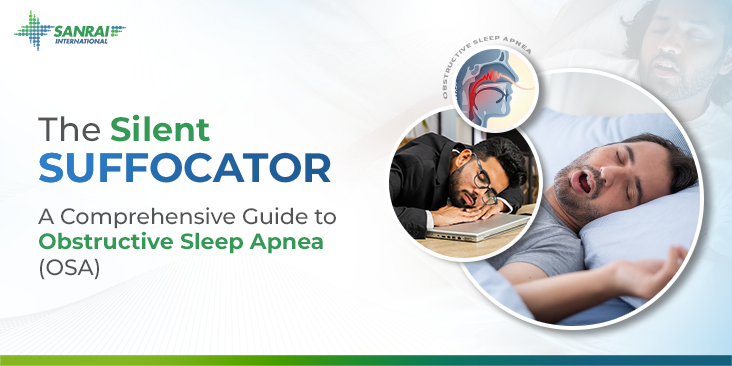
The Silent Suffocator: A Comprehensive Guide to Obstructive Sleep Apnea (OSA)
Sleep is often viewed as a passive state of recovery, but for millions of people worldwide, it is a nightly battle for breath. Obstructive Sleep Apnea (OSA) is one of the most prevalent yet underdiagnosed chronic conditions in modern medicine. Often dismissed as “just heavy snoring,” OSA is actually a serious neurological and cardiovascular stressor that, if left untreated, can shorten life expectancy and erode quality of life.
In this guide, we will dive deep into the mechanics of OSA, the warning signs you shouldn’t ignore, and the latest advancements in treatment—including the move toward safer, foam-free technology.
What Exactly is Obstructive Sleep Apnea?
At its core, OSA is a mechanical failure of the upper airway. When you fall asleep, your muscles relax. In a healthy individual, the airway remains open enough for air to flow freely. In someone with OSA, the soft tissues at the back of the throat—the tongue, soft palate, and tonsils—collapse completely or partially, sealing off the windpipe.
When the airway closes, your blood oxygen levels plummet. Your brain, sensing a crisis, sends a jolt of adrenaline to your system to “wake” you just enough to regain muscle tone and take a breath. This cycle can happen 5 to 100 times per hour, meaning your body remains in a constant state of “fight or flight” all night long.
Types and Examples of Sleep Apnea
While OSA is the most common form, it is often categorized by its severity or its relationship with other conditions:
| Type | Description | Example/Scenario |
|---|---|---|
| Mild OSA | 5 to 15 respiratory events per hour. | Someone who snores loudly and feels “foggy” but functions okay during the day. |
| Moderate to Severe OSA | 15 to 30+ events per hour. | An individual who gasps for air in their sleep and frequently falls asleep while driving or working. |
| Positional OSA | Airway collapse triggered by specific sleeping positions. | A person who only experiences apnea events when sleeping flat on their back (supine). |
| Complex (Mixed) Sleep Apnea | A combination of physical obstruction and neurological signaling issues. | A patient whose OSA is treated with a CPAP, but then begins showing signs of Central Sleep Apnea during therapy. |
The AHI Scale: Measuring Severity
Doctors measure OSA using the Apnea-Hypopnea Index (AHI):
- Mild: 5–15 events per hour.
- Moderate: 15–30 events per hour.
- Severe: More than 30 events per hour.
Beyond the Snore: Recognizing the Symptoms
While loud snoring is the hallmark of OSA, it isn’t the only sign. In fact, many people with severe apnea don’t realize they snore until a partner points it out.
- The Daytime Red Flags
Excessive Daytime Sleepiness: This isn’t just “feeling tired.” It’s the inability to stay awake during a meeting, while reading, or—most dangerously—while driving.
Morning Headaches: As oxygen levels drop and carbon dioxide builds up in the blood, cerebral blood vessels dilate, leading to a throbbing headache upon waking.
The “Brain Fog”: Chronic sleep fragmentation prevents the brain from entering the deep, restorative stages of sleep where “metabolic waste” is cleared. This results in poor memory, irritability, and decreased focus.
- The Nighttime Red Flags
Gasping or Choking: Waking up suddenly feeling like you are suffocating.
Nocturia: If you find yourself waking up multiple times a night to use the bathroom, it might not be your bladder. When the heart is stressed by an apnea event, it releases a hormone (Atrial Natriuretic Peptide) that signals the kidneys to produce more urine.
Bruxism (Teeth Grinding): Scientific studies show that many people grind their teeth as a subconscious reflex to move the jaw forward and keep the airway open.
Who is at Risk?
While the classic image of an OSA patient is an older, overweight male, 2026 clinical data confirms that OSA is an “equal opportunity” condition.
Anatomical Factors: A narrow throat, large tonsils, a deviated septum, or a “recessed” chin (micrognathia) can cause OSA regardless of body weight.
Age and Gender: Risk increases as we age and muscle tone decreases. While men are diagnosed more frequently, women’s risk increases significantly after menopause.
Lifestyle: Alcohol and sedatives relax the throat muscles further, making obstructions more likely. Smoking increases inflammation and fluid retention in the upper airway.
The Systemic Impact: Why You Can’t Ignore It
Untreated OSA is like leaving a car engine running at redline for eight hours every night. The long-term consequences are systemic:
Cardiovascular Disease: Each apnea event causes a spike in blood pressure. Over time, this leads to hypertension, arrhythmias (like Atrial Fibrillation), and a significantly higher risk of heart attack or stroke.
Metabolic Syndrome: OSA is closely linked to insulin resistance and Type 2 Diabetes. The stress of not breathing disrupts the hormones that regulate hunger (ghrelin and leptin), often leading to unexplained weight gain.
Mental Health: There is a bidirectional link between OSA and clinical depression. Fragmented sleep disrupts the regulation of neurotransmitters like serotonin and dopamine.
How to get an OSA test?
Testing for Obstructive Sleep Apnea (OSA) has become significantly more accessible in 2026. You generally have two paths: a specialized hospital study or a convenient home-based option.
Here is the step-by-step process for getting tested.
Step 1: The Preliminary Screening
Before ordering a clinical test, most doctors use a standardized screening tool. You can do this yourself right now:
The STOP-Bang Questionnaire: Ask yourself if you have Snoring, Tiredness, Observed apnea, High Pressure (BP), BMI > 35, Age > 50, Neck size > 17 inches, or are Gender male.
The Sleep Diary: Record your sleep for 3–5 nights. Note any morning headaches or middle-of-the-night gasping.
Step 2: Choose Your Testing Method
Depending on your health history, your doctor will recommend one of two types of “Sleep Studies.”
1. Home Sleep Apnea Test (HSAT) – The “Convenient” Choice
This is the most common first step for healthy adults with suspected moderate-to-severe OSA.
How it works: You pick up a small kit from a clinic or have it shipped to your house. It usually involves a finger clip (pulse oximeter), a nasal cannula (tube for your nose), and a belt around your chest.
What it measures: Oxygen levels, heart rate, and airflow?
Pros: Much cheaper (approx. ₹2,000 – ₹7,000 in India or $150–$500 in the US); you sleep in your own bed.
Cons: It doesn’t measure brain waves, so it can’t tell the difference between “light” and “deep” sleep.
2. In-Lab Polysomnography (PSG) – The “Gold Standard”
This is an overnight stay in a specialized sleep center.
Who it’s for: People with heart/lung conditions, suspected “Central” sleep apnea, or those whose home test was inconclusive.
How it works: Technicians apply roughly 20 sensors to your scalp, face, chest, and legs. They monitor you in real-time.
Pros: Extremely accurate; can diagnose other issues like Restless Leg Syndrome or Narcolepsy.
Cons: More expensive (₹5,000 – ₹25,000+); can be harder to fall asleep in a clinical setting.
Step 3: Getting the Prescription
In most regions, you cannot buy a clinical-grade sleep test over the counter; it must be ordered by a healthcare provider to ensure the results are interpreted correctly.
See a pulmonologist, ENT, Neurologist or Sleep Specialist: Discuss your symptoms.
Insurance Check: Most insurance plans cover the test if you meet the “medical necessity” criteria (like high AHI risk).
The Analysis: A board-certified sleep physician will review the data (the “raw tracings”) and provide a report with your AHI score.
Modern Treatment: The Gold Standard and Innovation
The primary treatment for OSA is Continuous Positive Airway Pressure (CPAP). This device acts as a “pneumatic splint,” using a gentle stream of pressurized air to keep the airway physically open.
The Rise of Foam-Free CPAP
In recent years, the sleep medicine community has shifted toward Foam-Free CPAP technology. Historically, CPAP manufacturers used sound-abatement foam (typically polyester-based polyurethane or PE-PUR) to make the machines quieter. However, concerns arose regarding the potential for this foam to degrade over time, especially when exposed to heat or certain cleaning methods (like ozone).
Why Foam-Free is the Scientific Choice:
Particulate Safety: Foam-free designs use medical-grade silicone or advanced mechanical baffles to dampen sound. This eliminates the risk of a patient inhaling microscopic foam particles or chemical vapors (VOCs) that could cause respiratory irritation.
Hygienic Integrity: Foam can act as a sponge for humidity and bacteria. By removing foam from the air path, modern devices are able to maintain and provide a “cleaner” breath of air, which is critical for a device you use for 7–8 hours a day.
Long-term Reliability: Silicone and mechanical dampeners do not degrade in the same way foam does, ensuring the machine remains safe for its entire lifespan.
Tips for Living with OSA
If you have been diagnosed, the journey to better health starts with consistency.
The 30-Day Rule: Most people take about a month to get used to wearing a CPAP mask. Don’t give up in the first week.
Humidity Control: Use a heated humidifier and tubing to prevent “rainout” (condensation) and keep your nasal passages from drying out.
Positional Therapy: If your apnea is worse on your back, try “side-sleeping” pillows or devices that prevent you from rolling over.
Avoid Alcohol Before Bed: Try to stop drinking at least 3-4 hours before sleep to keep your throat muscles from over-relaxing.
Conclusion: Taking the First Step
Sleep apnea is a thief. It steals your energy, your mood, and your long-term health. But the good news is that it is highly treatable. With modern diagnostic tools—home sleep tests—and safer, foam-free CPAP technology, there is no reason to suffer in silence.
If you or your partner recognize these symptoms, schedule an appointment with a sleep specialist. Reclaiming your breath is the first step toward reclaiming your life.